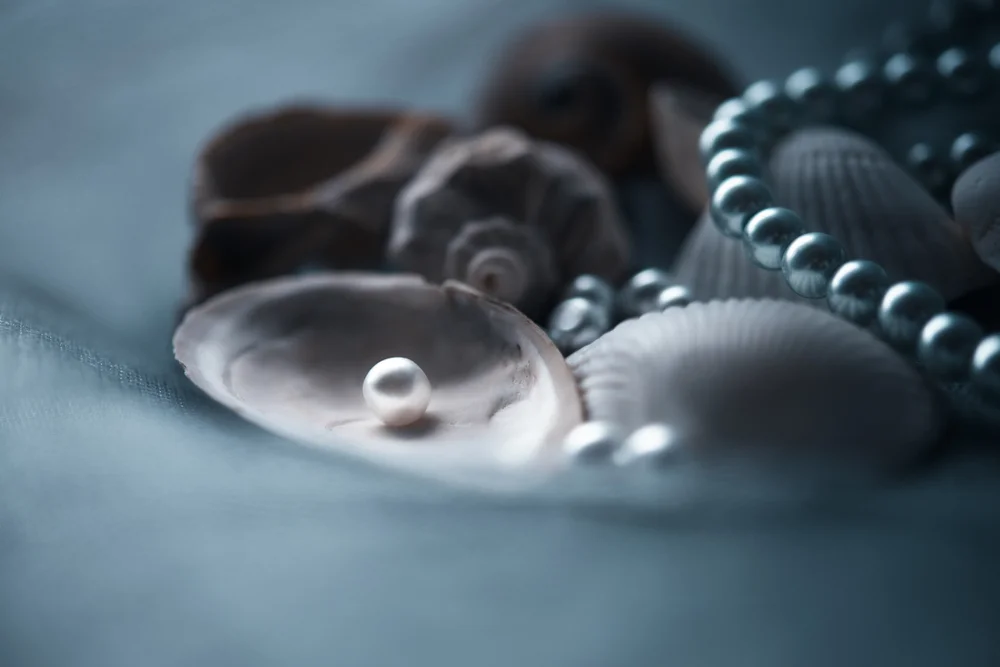

Pearls, also known as the "tears of the sea," have captivated human imagination for thousands of years. With their natural luster and unparalleled elegance, pearls have always symbolized purity, femininity, and sophistication. Throughout history, queens and nobles have worn pearls to emphasize their status and wealth, and today, pearls are admired by all generations due to their versatility and unique beauty.
How are pearls formed?
Pearls are formed inside mollusks, especially oysters and mussels. The process begins when a foreign body, such as a grain of sand or a parasite, enters the mollusk's shell. The mollusk then begins to secrete layers of nacre, a hard material made of calcium carbonate crystals, to isolate the irritant. Over time, as nacre continues to accumulate, a pearl is formed.
There are two main types of pearls: natural and cultured. Natural pearls are extremely rare and valuable, while cultured pearls are produced on pearl farms, where irritants are intentionally introduced into the mollusks to initiate the formation process.
Types of Pearls
There are several types of pearls, each with distinct characteristics:
1. Saltwater Pearls - Originating from oceans, these pearls include the famous Akoya, Tahitian, and South Sea pearls. Tahitian pearls are known for their deep black color, while South Sea pearls are admired for their size and luster.
2. Freshwater Pearls - These are cultivated in rivers and lakes, especially in Asia. They are more affordable and come in a wide range of shapes and colors.
3. Keshi Pearls - These are accidental pearls, naturally formed during the culture process. They are valued for their irregular shapes and unique shine.
4. Mabe Pearls - These are semi-spherical pearls cultivated on the inner shell surface and are often used in jewelry like rings or earrings.
The Cultural and Historical Significance of Pearls
Pearls have been cherished in various cultures and historical periods. In Ancient Egypt, Cleopatra is famously known for allegedly dissolving a pearl in a glass of vinegar to showcase her wealth. In Ancient Rome, pearls were considered symbols of high social status and were forbidden to lower classes.
In Chinese culture, pearls symbolize wisdom, and in Japan, they are considered symbols of good fortune. Today, pearls continue to be a universal symbol of elegance and refinement, often chosen for jewelry worn on special occasions.